




Ask the Expert | Union Health Benefits
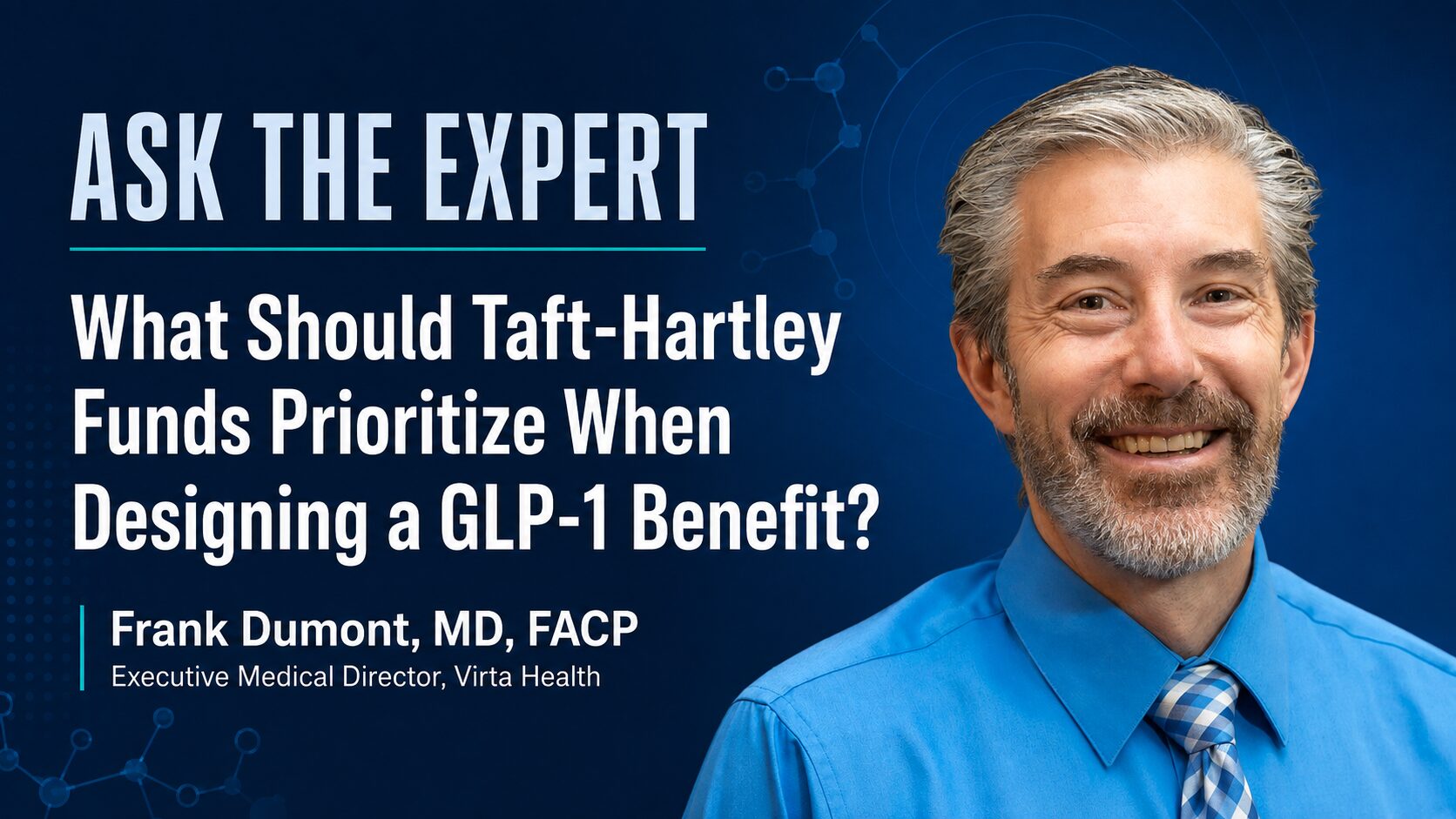
Expert Answer by Frank Dumont, MD, FACP, Executive Medical Director at Virta Health
Published by LaborForce Media
GLP-1 medications have created new opportunities for treating obesity, type 2 diabetes, and other metabolic health conditions. They have also presented Taft-Hartley funds and multi-employer health plans with difficult questions about clinical appropriateness, long-term outcomes, member support, and rapidly rising prescription costs.
For union benefit leaders, the question is not simply whether to cover GLP-1 medications. It is how to design a responsible benefit that supports members’ health while protecting the long-term sustainability of the fund.
We asked Dr. Frank Dumont, Executive Medical Director at Virta Health, which coverage priorities and clinical guardrails he would put in place first when building a GLP-1 benefit for a self-funded Taft-Hartley fund or multi-employer group.
Begin with the needs of the union population
The first priority is to design the benefit intentionally around the needs of the union population and the health outcomes the fund is trying to achieve.
A strong benefit should not treat GLP-1 coverage as a stand-alone pharmacy decision. It should be part of a broader metabolic health strategy that gives members access to individualized care and supports outcomes that can be sustained over time.
Dr. Dumont recommends building the benefit around three core elements.
1. Offer an effective option that does not depend solely on medication
Members should have access to a meaningful, evidence-based treatment option even if they do not qualify for a GLP-1 medication, prefer not to take one, cannot tolerate it, or are advised against it by their healthcare provider.
A medication-independent pathway also helps ensure that the fund’s metabolic health benefit reaches a broader portion of the eligible population rather than serving only those who receive a prescription.
2. Surround GLP-1 use with clinical and lifestyle support
GLP-1 medications can be appropriate and highly effective for some people, but they should not be treated as a stand-alone solution.
When medication is prescribed, members should receive the clinical oversight, nutritional guidance, and behavioral support needed to use it safely and effectively. This care model can help members manage side effects, make sustainable changes, and work toward broader improvements in their metabolic health.
3. Create a path beyond indefinite medication use
Medication should be paired with an effective lifestyle intervention so that members can build habits and make health improvements that extend beyond the prescription itself.
When clinically appropriate and directed by the member’s healthcare provider, the benefit should provide a structured path to reduce or discontinue the medication. It should not automatically assume that every member must remain on GLP-1 therapy for life.
The Expert’s Takeaway
A well-designed GLP-1 benefit should provide more than access to medication. It should give members multiple paths to better health, establish appropriate clinical oversight, and combine medication with nutritional and behavioral support.
GLP-1 medications can be valuable tools, but they work best within a broader, individualized care model—not as a stand-alone benefit.
For Taft-Hartley funds and multi-employer plans, this approach can help balance three essential responsibilities: supporting member health, encouraging sustainable outcomes, and managing the fund’s long-term healthcare investment.
This new guide talks more about how to turn GLP-1s into lasting outcomes. Click here to get it now. Or click here to connect directly with Virta’s Union team.
About Frank Dumont, MD, FACP
Dr. Frank Dumont is Executive Medical Director at Virta Health, where he focuses on medical strategy to advance safe, scalable, and sustainable metabolic healthcare. Before joining Virta, he spent nearly two decades practicing internal medicine at Estes Park Medical Center and served as Medical Director of its Wellness Service Line.
Dr. Dumont is a Fellow of the American College of Physicians and has held leadership roles in organized medicine, including service on the Colorado Medical Society Board of Directors and as a young physician representative to the American Medical Association. He earned his medical degree from the University of Colorado Health Sciences Center. Learn more about Dr. Dumont.
This column is intended for general educational purposes and should not be considered medical advice. Medication and treatment decisions should be made by qualified healthcare providers based on each member’s individual clinical needs.
Tags: