




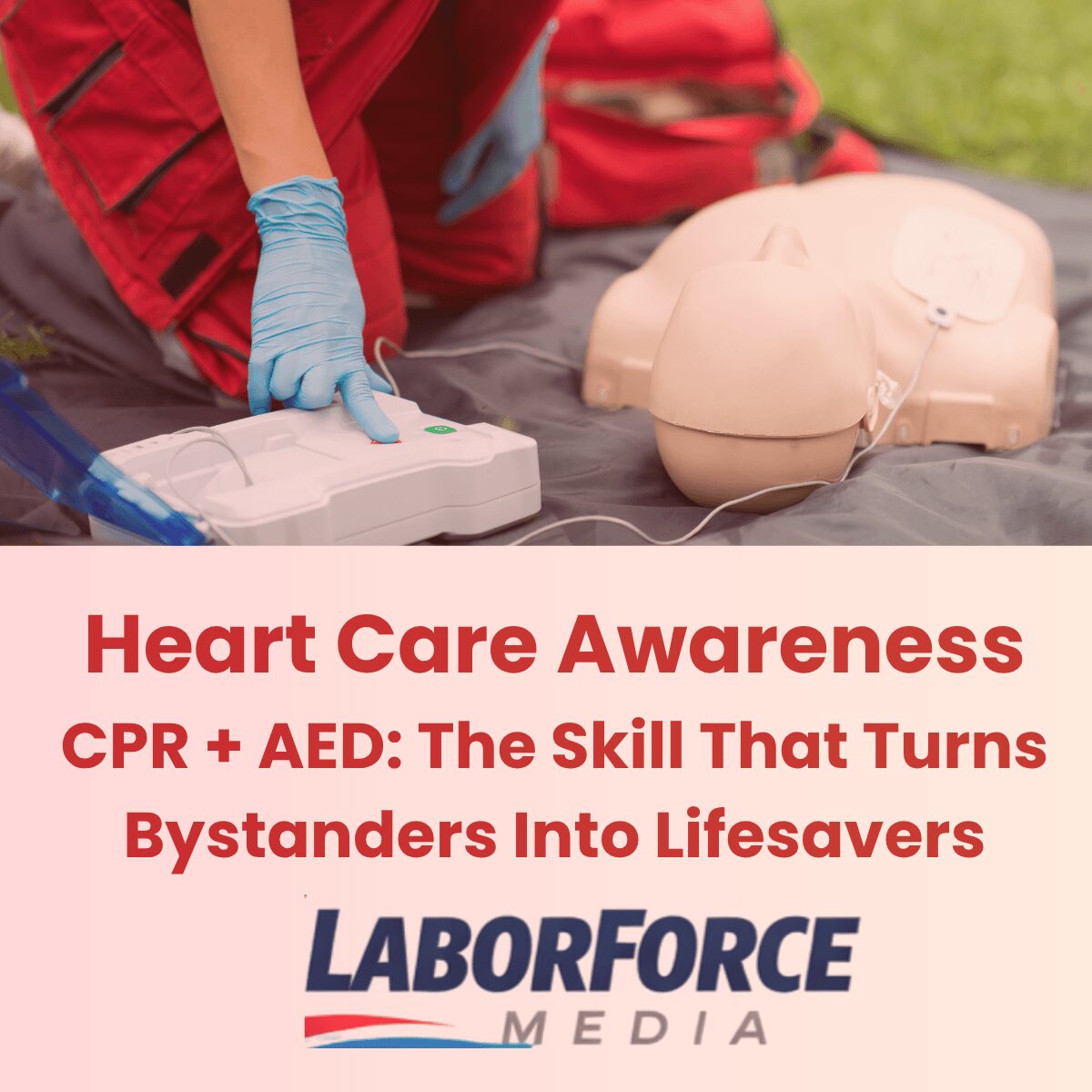
Most people assume they’ll never need CPR. And that’s exactly why CPR matters. Sudden cardiac arrest often happens at home, at work, or in public—and the person’s best chance is the people nearby.
CPR is the bridge that keeps blood moving to the brain until emergency teams arrive. If more people knew CPR, more families would avoid the unthinkable.
Cardiac arrest vs. heart attack: quick clarity
- Heart attack: circulation problem—blocked blood flow to the heart muscle
- Cardiac arrest: electrical problem—heart stops beating effectively
A heart attack can lead to cardiac arrest. Cardiac arrest requires immediate CPR and AED.
Hands-only CPR: simple and powerful
If an adult collapses and is not breathing normally:
- Call 911 (or have someone call)
- Place hands in the center of the chest
- Push hard and fast—about 100–120 compressions per minute
- Keep going until help arrives or the person starts breathing normally
You don’t need to be perfect. You need to start.
AEDs: the device that talks you through it
An AED (Automated External Defibrillator) checks the rhythm and tells you what to do. It will not shock someone who doesn’t need it.
If an AED is available:
- Turn it on
- Follow the voice prompts
- Continue CPR until instructed otherwise
Why unions are built for lifesaving culture
Union halls, training centers, worksites, and gatherings bring people together—meaning they’re ideal places to make CPR training normal:
- CPR/AED training offered quarterly
- AED location signage posted clearly
- Safety leaders trained as CPR champions
- Brief “CPR refreshers” added to meetings or apprenticeship programs
This is what it means to look out for each other—not just on the job, but in life.
Your CPR action step
This month:
- Take a CPR/AED class
- Or commit to a refresher if it’s been more than two years
- Teach your household the basics: call 911, start compressions, find the AED
It’s a small investment that can pay off in a moment you never saw coming.
Tags: