




LaborForce Media | Kerri O’Brien | July 28, 2026
The labor movement has always been built on a simple but powerful idea: we look out for one another.
That idea shows up on jobsites, in union halls, at bargaining tables, during difficult shifts, and in the everyday moments when one member checks on another. It is part of what makes unions strong. No one should have to stand alone when safety, health, dignity, or family security are on the line.
That same spirit belongs at home.
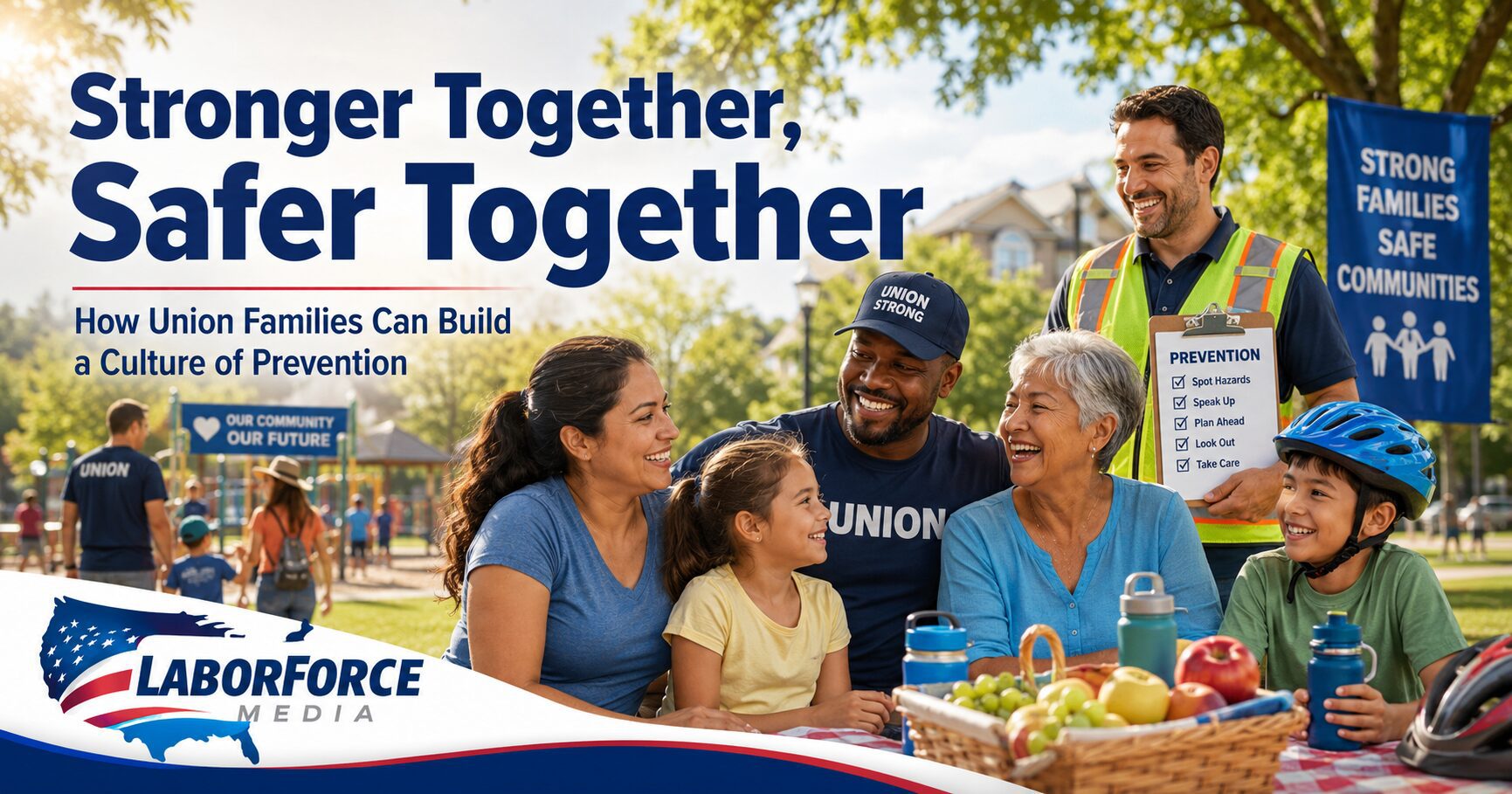
For union families, prevention is not just a checklist. It is a culture. It is the habit of paying attention early, asking better questions, making small changes, and protecting the people who count on us most.
Prevention Starts With Paying Attention
A culture of prevention begins before there is a crisis.
It starts when a member notices they are more tired than usual and schedules the physical. It starts when a parent checks the car seat before a road trip. It starts when a spouse encourages a dental appointment that has been delayed. It starts when a family cleans out old prescriptions, updates passwords, checks smoke detectors, or helps an older relative make the home safer.
None of these actions feel dramatic in the moment. But they matter.
Prevention is often quiet. It happens in phone calls, calendar reminders, kitchen table conversations, and small choices that protect a family’s future.
Safety Is a Family Value
Union members understand safety. They know that safe work does not happen by accident. It takes training, preparation, communication, and accountability.
The same is true at home.
Families can build safety into everyday life by talking about emergency contacts, medication lists, home hazards, driving habits, water safety, online scams, and mental health. These conversations do not need to be heavy or frightening. They can be practical, caring, and age-appropriate.
A child can learn why helmets, seat belts, and sunscreen matter. A teenager can learn how to recognize unsafe driving or suspicious online messages. An adult child can help a parent review prescriptions or reduce fall risks at home. A retiree can remind younger family members that health is something to protect, not something to take for granted.
Safety becomes stronger when it becomes normal.
Prevention Includes Mental Health
A true culture of prevention includes the conversations people often avoid.
Stress, grief, anxiety, depression, burnout, financial pressure, caregiving strain, substance use concerns, and sleep problems can affect any family. Many working people are used to pushing through, staying quiet, and telling everyone they are fine.
But silence is not strength.
Strength is knowing when to ask for help. Strength is checking on a coworker who seems different. Strength is using the Employee Assistance Program, calling a provider, talking to a trusted friend, or making space for someone to say, “I’m not okay.”
Union families do not have to wait for a crisis to support mental health. Prevention can begin with one honest conversation.
Union Leaders Can Help Set the Tone
Union leaders, stewards, benefit fund teams, and trusted voices in the labor community can make prevention easier to talk about.
A reminder in a newsletter, a social media post, a toolbox talk, a meeting, or a benefit communication can encourage members to schedule checkups, review medications, use covered preventive services, protect online accounts, and talk with their families about safety.
The message does not have to be complicated. It can be as simple as: take care of yourself, use your benefits, check on your family, and do not wait until something goes wrong.
That kind of leadership matters. It gives members permission to prioritize their health and safety.
Strong Families Build Strong Communities
Prevention also lives in the community.
It shows up when families use parks, playgrounds, beaches, trails, ballfields, recreation centers, and green spaces. It shows up when neighbors volunteer for a cleanup, check on seniors during the heat, support youth sports, or thank the public workers who keep community spaces safe and welcoming.
Healthy families make stronger unions. Stronger unions help build stronger communities.
This July, choose one safety move, one health appointment, and one community connection. Check the detector. Make the call. Schedule the visit. Update the password. Thank a parks worker. Talk to someone you love.
Prevention is not about fear. It is about care.
And when union families build that culture together, we all become stronger together and safer together.
Tags: Community Wellness, Union Workers