




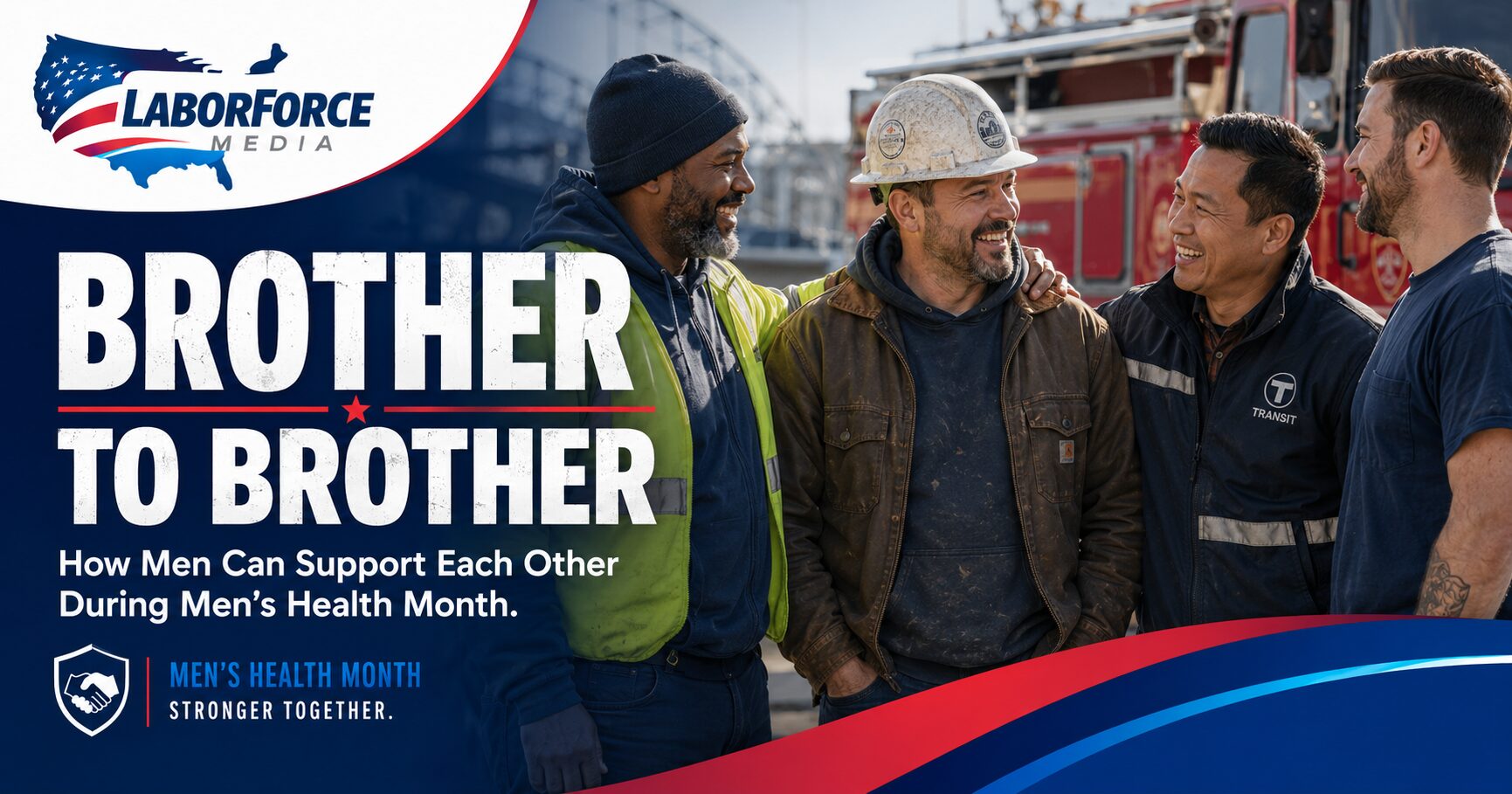
Men often know how to work side by side. They can build together, serve together, respond together, coach together, and solve problems together. But when it comes to their own well-being, especially topics like Men’s Health, stress, fear, or pain, too many men go silent.
Men’s Health Month is an opportunity to change that.
Supporting another man does not require a degree, a perfect speech, or all the answers. Sometimes it starts with noticing. A coworker who has become quiet. A friend who stopped showing up. A brother who is drinking more. A father who seems tired all the time. A union brother who jokes about everything but never says how he is really doing. It all matters for Men’s Health and wellness.
The first step is simple: check in.
Not “How are you?” in passing. Ask directly, privately, and without making it awkward. Bringing up Men’s Health can be as direct as the questions you ask.
“ You haven’t seemed like yourself. Everything okay?”
“ You’ve been carrying a lot. Want to grab coffee?”
“ I’m making my doctor’s appointment this month. Have you done yours?” For many, this is a great way to prioritize Men’s Health discussions.
“ I’m serious — how are you really doing?”
Men often respond better when support feels practical and honest. Do not make it dramatic. Do not turn it into a lecture. Just open the door for real conversations about Men’s Health, too.
The second step is to normalize taking action.
A lot of men avoid health care because they do not want to seem weak, worried, or needy. That mindset costs too much. Real strength is not ignoring symptoms. Men’s Health relies on dealing with them.
Encourage the men around you to schedule checkups, follow up on referrals, ask about screenings, get blood pressure checked, address injuries, and talk about stress. Preventive care can catch problems earlier and help men stay well—an important part of Men’s Health and living longer lives.
You can also make it easier by doing it together. Two coworkers can schedule annual physicals in the same month. A group of friends can start a walking challenge. A union local can host a blood pressure screening. A father and son can both commit to dental appointments. A crew can sign up for a charity 5K or recreational league. Each of these actions supports Men’s Health in everyday life.
Men support each other best when accountability feels like brotherhood, not criticism.
The third step is to talk about mental health like health.
Many men will admit their back hurts before they admit they are anxious, depressed, lonely, grieving, burned out, or scared. But mental health and physical health are connected. CDC guidance emphasizes that Men’s Health, both mental and physical, is a key part of overall well-being.
Watch for changes: anger, withdrawal, reckless behavior, substance misuse, sleep problems, hopeless comments, or a loss of interest in things he used to enjoy. If you are worried, say something. You do not need to diagnose him. You need to care enough to ask about Men’s Health concerns, too.
If someone may be in crisis, stay with him and connect him to immediate help. In the United States, the 988 Suicide & Crisis Lifeline is available by call or text 24/7—crucial for Men’s Health emergencies.
The fourth step is to build healthier male spaces.
Men need places where they can be useful, active, respected, and honest. That might be a union hall, jobsite, firehouse, garage, church group, fishing boat, gym, softball field, veterans group, or breakfast table. The setting matters less than the culture. Creating male spaces focused on Men’s Health can make a significant difference.
A healthy male space makes room for more than jokes and small talk. It makes room for grief, pressure, fatherhood, money stress, health scares, aging, marriage, divorce, caregiving, and purpose—all essential aspects of Men’s Health for any man.
This June, start small.
Ask one man to join you for a walk, a positive step for Men’s Health and connection.
Share that you scheduled your own checkup.
Invite someone back into the circle. When you do, you’re investing in Men’s Health for your friends and yourself.
Tell a friend you are proud of him.
Listen without trying to fix everything. Sometimes, just listening can be a silent service to Men’s Health and emotional well-being.
Men do not need to carry life alone. Brother to brother, coworker to coworker, father to son, friend to friend — support is health care too. Focusing on Men’s Health can help everyone carry the load together.
Tags: