




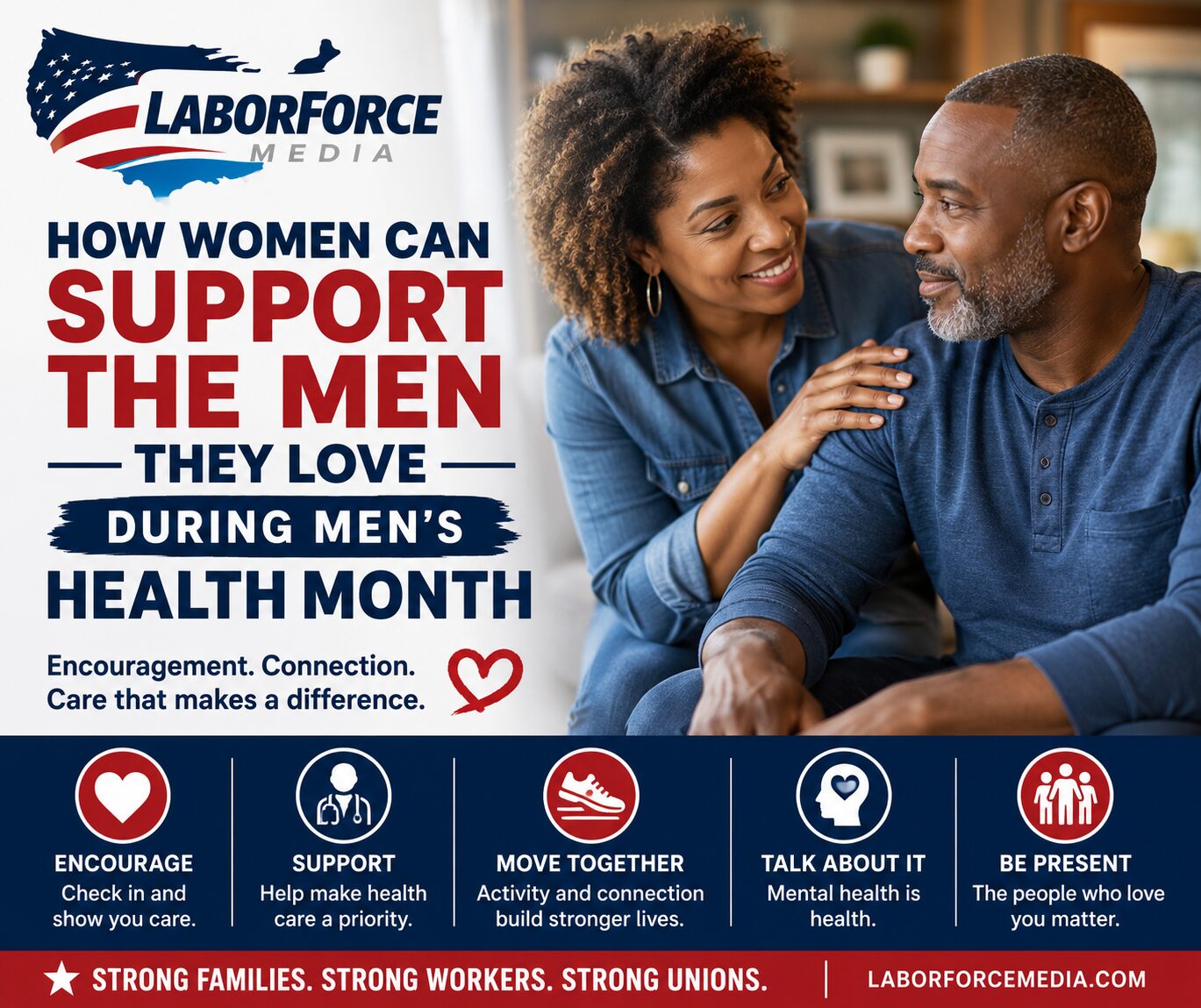
Men’s Health Month is not only for men. It is also an opportunity for wives, mothers, daughters, sisters, partners, friends, and coworkers to support the men they love in a way that is helpful, respectful, and lasting.
Many women are already doing this every day. They notice the cough that will not go away. They remember the appointment that was never scheduled. They hear the stress in his voice. They see the exhaustion, the irritability, the limp, the weight change, the worry, or the silence. In fact, this kind of awareness and support is especially important throughout the month focused on men’s health.
But support works best when it is not nagging, shaming, or taking over. The goal is not to manage a man’s life for him. The goal is to help him take ownership of his health, particularly during Men’s Health Month when conversation and encouragement are needed most.
Start with encouragement, not criticism.
Instead of “You never go to the doctor,” try, “I want you around for a long time. Can we get your checkup scheduled this month?” This can be a gentle reminder inspired by the spirit of Men’s Health Month as well.
Instead of “You need to lose weight,” try, “Let’s start walking after dinner together.” This small step also supports the mission of Men’s Health Month.
Instead of “You’re always stressed,” try, “You seem like you’ve been carrying a lot. I’m here if you want to talk.”
Men may respond better when the message is connected to purpose: family, work, grandchildren, retirement, travel, coaching, fishing trips, future plans, and being present for the people who love them. Linking these priorities to Men’s Health Month can provide motivation.
Help make health care easier.
Some men delay care because they are busy, unsure where to start, or overwhelmed by the system. You can support without taking control by asking, “Would it help if we looked at dates?” or “Do you want me to help find the number?” or “Can I remind you tomorrow?” Participating in events during Men’s Health Month can also make getting started less overwhelming.
Encourage him to schedule an annual physical, complete overdue blood work, follow up on referrals, and ask about age-appropriate screenings. Regular preventive care can include screening tests, vaccines, dental cleanings, and counseling to help people make informed decisions, and all of this is central to Men’s Health Month awareness efforts.
Support movement without making it a punishment.
Healthy activity should not feel like a sentence. Invite him into something enjoyable: an evening walk, a bike ride, swimming, pickleball, fishing with extra walking, dancing, yardwork, golf, softball, basketball, or a family hike. Adults benefit from regular physical activity, and even smaller amounts can help. The CDC recommends 150 minutes of moderate-intensity activity per week and two days of muscle-strengthening activity, especially as promoted during Men’s Health Month programs.
Better yet, make it social. Invite another couple. Encourage him to reconnect with friends. Suggest a league, class, veterans group, union event, or community project. Social connection supports both mental and physical health, and people with stronger social bonds are more likely to live longer, healthier lives. This social aspect is highlighted each June as part of Men’s Health Month.
Pay attention to emotional health.
Many men express stress, depression, or anxiety differently than women might expect. It may show up as anger, withdrawal, overworking, drinking more, sleeping poorly, or losing interest in things he used to enjoy. Mental health is closely connected to physical health, and help is available when someone is struggling. Most importantly, addressing emotional well-being is one of the key goals of Men’s Health Month and can make a meaningful difference.
If you are concerned, choose a calm moment. Be direct but loving: “I’m worried about you. You do not have to handle this alone.” Offer support, but do not force a conversation. If there is any concern about immediate danger or crisis, call or text 988.
Finally, recognize what he already does right.
Men often hear what needs fixing. They may not hear enough about what they mean to their families. Tell him. Thank him. Appreciate his work, his presence, his effort, his loyalty, and his love. This positive reinforcement is especially valuable as part of Men’s Health Month celebrations and ongoing support.
This June, the women who love men can help shift the message from “Take care of yourself because something is wrong” to “Take care of yourself because you matter.” And that is the true spirit behind observing Men’s Health Month in your community.
That message can save lives.
Tags: