




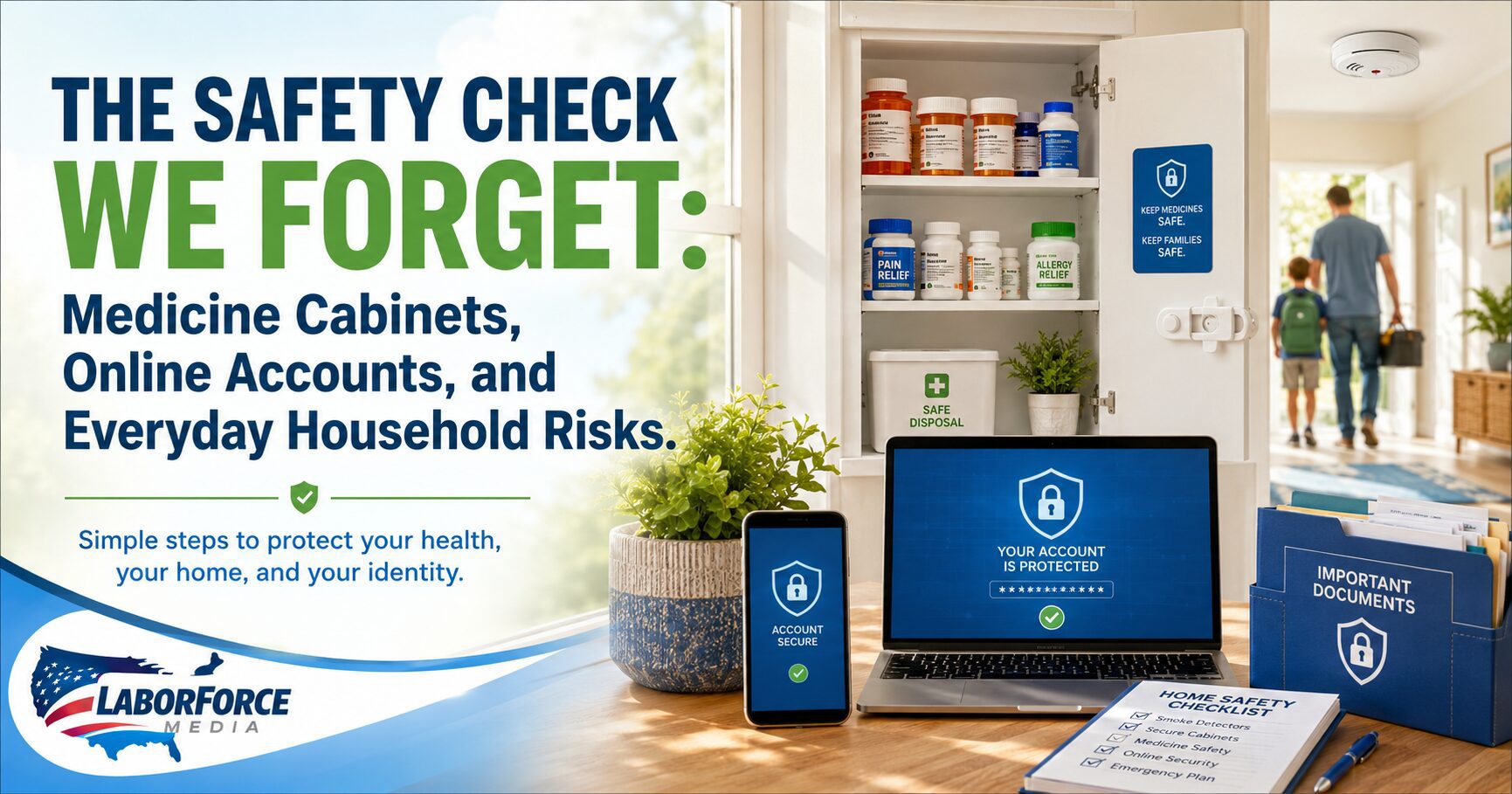
Some safety risks are easy to see. Conducting a household safety check can help you identify those that aren’t as obvious.
A broken step. A slippery floor. A child too close to the pool. A driver reaching for a phone.
But many of the risks that affect union families every day are quieter. They sit inside a medicine cabinet, an old drawer, an unlocked phone, a reused password, a pile of mail, or a hallway rug we stopped noticing years ago. A regular household safety check helps you spot these hidden dangers.
That is why July is a good time for a household safety check. Not a major project. Not a full home renovation. Just a practical reset to protect your family, your health, your identity, and your peace of mind.
Start With the Medicine Cabinet
The medicine cabinet is one of the most important safety checks in any home. Including it in your household safety check adds an important layer of prevention.
Expired prescriptions, old antibiotics, leftover pain medications, sleep aids, and unused bottles can create real risks, especially in homes with children, teenagers, visitors, older adults, or pets. Medications that were once needed may no longer be safe, useful, or appropriate.
Take a few minutes to look through every bathroom cabinet, kitchen drawer, purse, backpack, and bedside table where medications may be stored. Check expiration dates. Separate anything that is no longer needed. Make sure current medications are clearly labeled and stored safely.
When disposing of unused medications, avoid guessing. Many pharmacies, police departments, and community programs offer safe medication take-back options. Some medications also come with specific disposal instructions. When in doubt, ask a pharmacist.
Medication safety is not about judgment. It is about prevention.
Protect Children, Teens, Seniors, and Pets
A safe home changes as the people in it change.
For families with babies or young children, cabinets, outlets, stairs, windows, pools, cleaning supplies, batteries, and medications deserve another look. Childproofing is not something you do once. Children grow, climb, open, and explore faster than adults expect.
For teenagers, safety may include conversations about medication misuse, online risks, driving, alcohol, and peer pressure. These conversations can feel uncomfortable, but silence does not protect anyone.
For older adults and retirees, fall prevention is a major part of household safety. Loose rugs, poor lighting, slippery bathrooms, cluttered walkways, unstable railings, and hard-to-reach items can all increase risk. Small changes — better lighting, grab bars, clear pathways, and secure handrails — can make a home safer and more comfortable.
And do not forget pets. Cleaning products, human medications, certain foods, lawn chemicals, and open doors or gates can create hazards for animals that are part of the family. A household safety check should include checking for pet-related hazards as well.
Check Your Online Safety
Today, family safety also includes cyber safety.
Most households have online banking, health portals, prescription accounts, school accounts, retirement accounts, benefit portals, email, social media, and shopping accounts. That is a lot of personal information in a lot of places.
A good mid-summer cyber safety check can include changing weak or repeated passwords, turning on two-factor authentication, updating phones and computers, and reviewing bank and credit card activity. It is also smart to make sure older relatives know not to click suspicious links, respond to urgent texts from unknown numbers, or give personal information to callers claiming to represent a bank, government agency, health plan, or benefit provider.
Union families should be especially careful with benefit, pension, healthcare, and financial communications. If something feels suspicious, do not click. Go directly to the official website or call the trusted number you already have. Conducting a household safety check often will help your family stay safe from both physical and digital threats.
Protect Your Identity
Identity safety starts with small habits.
Shred documents that include Social Security numbers, account numbers, medical information, pension information, or financial details. Review mail before tossing it. Be cautious with forms, online surveys, QR codes, and emails asking for personal information.
Fraud can happen to anyone. Scammers often target people during busy seasons, after major life changes, or when they are trying to manage healthcare, benefits, finances, or family responsibilities. Staying alert is not paranoia. It is protection.
Make One Safety Sweep This Week
A full safety reset does not have to happen in one day. Start small.
Pick one cabinet, one drawer, one online account, and one room. Clean out expired medications. Update one password. Check one smoke detector. Move one loose rug. Secure one cleaning product. Talk to one family member about a safety habit.
For union members, safety has always been about looking out for one another. That same commitment belongs at home.
The risks we forget are often the ones we see every day. Therefore, a household safety check can be your best protection against everyday hazards.
This July, take a fresh look. A safer home, a safer account, and a safer routine can help protect the people who matter most.
Tags: Family Safety