




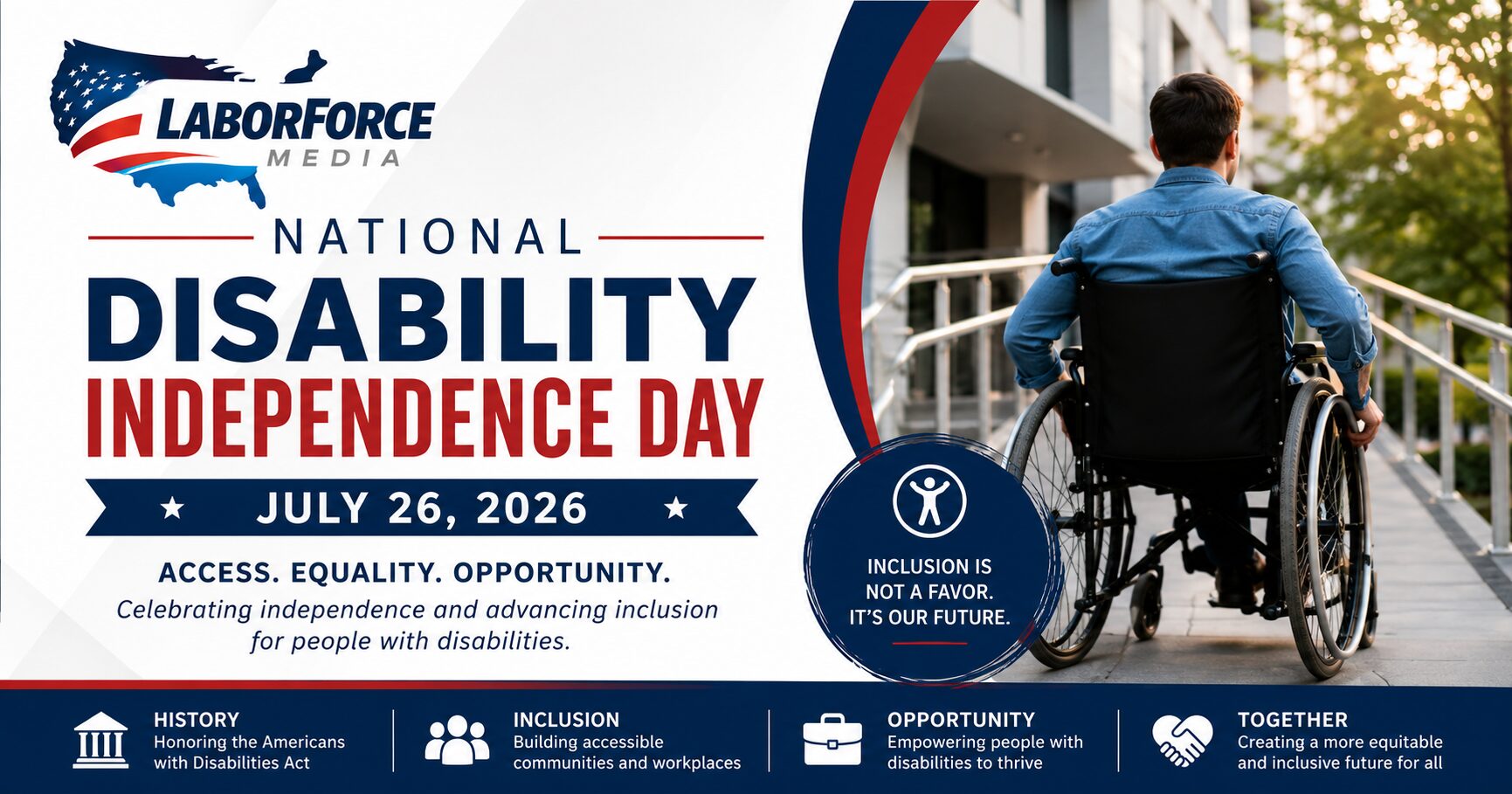
National Disability Independence Day is observed each year on July 26 to commemorate the signing of the Americans with Disabilities Act and recognize the continuing movement toward full inclusion for people with disabilities.
In 2026, the observance marks the 36th anniversary of the Americans with Disabilities Act, commonly known as the ADA. The day offers employers, unions, government agencies and communities an opportunity to celebrate progress while identifying the barriers that still limit independence and opportunity.
The History of National Disability Independence Day
On July 26, 1990, President George H.W. Bush signed the Americans with Disabilities Act into law. The ADA became the world’s first comprehensive civil rights law protecting people with disabilities. It prohibits disability-based discrimination in areas including employment, public services, transportation, public accommodations and telecommunications.
The law was the result of decades of advocacy by people with disabilities, families, legal advocates and civil rights leaders. Their work challenged the idea that exclusion was inevitable and demanded equal access to workplaces, schools, transportation, public buildings and community life.
During the signing ceremony, President Bush described the occasion as another form of Independence Day—one centered on equality, freedom and the opening of previously closed doors.
National Disability Independence Day grew from this historic milestone. It recognizes both the legal protections created by the ADA and the broader principle that people with disabilities should be able to make decisions, pursue careers and participate fully in society.
Why Disability Independence Still Matters
The ADA transformed the physical and legal landscape of the United States. Accessible entrances, workplace accommodations, captioning, curb cuts and inclusive transportation are now more common.
However, legal compliance alone does not create full inclusion.
People with disabilities may still encounter inaccessible technology, limited transportation, workplace bias, inflexible hiring practices and assumptions about what they can accomplish. Some disabilities are visible, while others are not. Effective inclusion requires organizations to listen, remove unnecessary barriers and create systems that work for people with different needs.
Disability independence also benefits everyone. Accessible technology, flexible work arrangements, clear communication and safer facilities often improve the experience for all employees and community members.
Actions Employers and Unions Can Take
Employers and labor organizations can use National Disability Independence Day to evaluate their policies and workplace practices.
Start by reviewing job descriptions and application systems for unnecessary barriers. Make the accommodation process clear, confidential and easy to access. Train managers to focus on essential job functions rather than assumptions about disability.
Organizations should also examine whether websites, employee communications, meetings, training materials and facilities are accessible. Employees with disabilities should be included when policies and programs are designed—not consulted only after a problem develops.
Union leaders can play an important role by educating members about workplace rights, supporting accommodation requests and advocating for accessible workplaces through collective bargaining and labor-management collaboration.
Independence Requires Continued Action
National Disability Independence Day celebrates an important civil rights achievement, but it should also inspire action.
On July 26, employers, unions and community leaders can honor the ADA by asking a practical question: What barrier can we remove today?
Every improvement in access strengthens workplaces, expands opportunity and moves the nation closer to the ADA’s promise of equality, independence and full participation.
Tags: Union Workers