




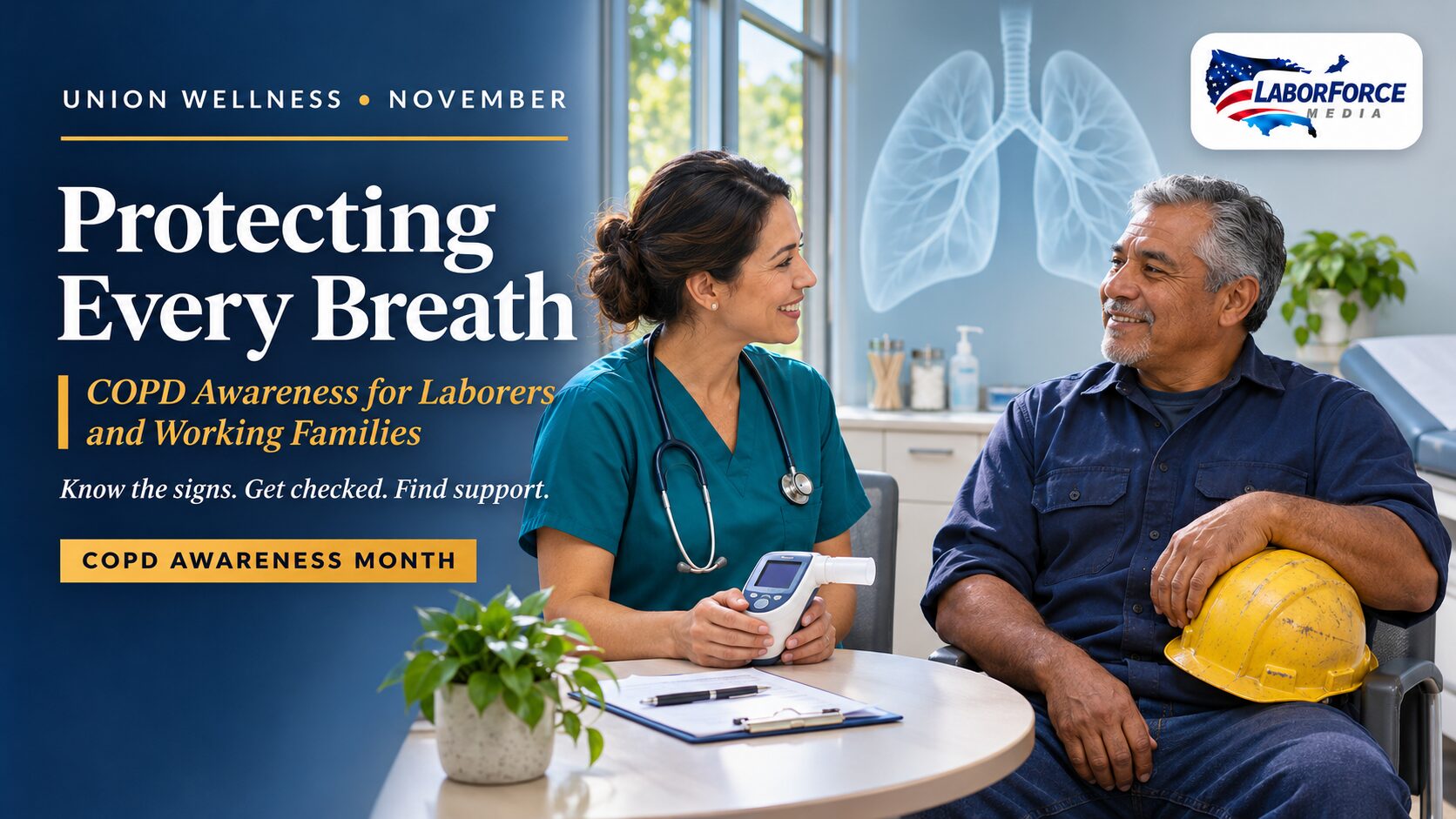
An ongoing cough or increasing breathlessness deserves attention. Getting checked can open the door to treatment, greater confidence, and a more active life.
You notice yourself stopping halfway up the stairs. A cough follows you from the jobsite to home. Tasks you once handled comfortably require more time to catch your breath.
It can be tempting to blame age, a demanding job, or being out of shape. But persistent breathing changes deserve a conversation with a healthcare professional.
November is COPD Awareness Month, an opportunity for laborers, union members, and retirees to understand their risks and take action. Getting checked is a practical step toward protecting your ability to work, enjoy family time, and keep doing what matters to you.
What Is COPD?
Chronic obstructive pulmonary disease, or COPD, is a long-term condition that limits airflow through the lungs. It commonly involves emphysema, which damages the lungs’ air sacs, and chronic bronchitis, which involves persistent airway irritation and mucus production.
COPD varies considerably from person to person. Although there is currently no cure, treatment can reduce symptoms, improve daily functioning, and help people remain active. A diagnosis does not automatically mean someone needs oxygen or must stop working.
Why Lung Health Belongs in the Labor Conversation
Smoking is a major cause of COPD, but it is not the only cause. People who have never smoked can develop the disease.
NIOSH has estimated that workplace exposures contribute to approximately 14% of COPD cases overall and 31% among people who have never smoked. These are population estimates, not a way to determine the cause of an individual’s disease.
For laborers and skilled trades workers, relevant exposures may include silica-containing dust from concrete and masonry, welding fumes, diesel exhaust, wood dust, and chemical vapors. The risk depends on the substance, exposure level, duration, and protective measures in place. Your work history matters even after you change jobs or retire.
A History of Workers Standing Up for Their Lungs
Lung health has long been part of the fight for safer working conditions.
During the 1960s, coal miners organized to demand protection from coal dust and recognition of black lung disease. The United Mine Workers of America recounts how miners’ advocacy helped secure West Virginia black lung legislation in March 1969. Later that year, the Federal Coal Mine Health and Safety Act established the national program that now provides respiratory health surveillance for coal miners.
Black lung and COPD are different conditions, although occupational exposures can contribute to both, and they may occur together. Their history reinforces a shared principle: workers deserve protection from harmful air and access to appropriate evaluation.
Today, the Laborers’ Health & Safety Fund of North America continues educating workers and employers about hazards such as silica, which can contribute to COPD and other serious lung diseases.
Signs That It Is Time to Get Checked
Schedule an appointment if you notice:
- Shortness of breath during activities that previously felt manageable.
- A cough that persists or repeatedly returns.
- Frequent mucus or phlegm.
- Wheezing or chest tightness.
- Repeated respiratory infections.
- Reduced stamina or fatigue that limits your usual activities.
These symptoms do not automatically mean COPD. Other conditions can cause similar problems, and identifying the cause is the purpose of an evaluation. You do not need to wait until breathing becomes severely limited to seek help.
Call 911 for severe or rapidly worsening breathing difficulty, trouble speaking because of breathlessness, blue or gray lips, or new confusion.
What Happens During Testing?
Your provider will ask about symptoms, smoking and secondhand smoke, previous illnesses, family history, and workplace exposures. Describe the tasks you performed—not just your job title.
For example: “I cut concrete,” “I worked around diesel equipment,” or “I welded in enclosed spaces.”
The main diagnostic test is spirometry, a noninvasive breathing test. You take a deep breath and blow forcefully into a mouthpiece connected to a machine. It measures how much air you exhale and how quickly. Testing before and after an inhaled airway-opening medication helps clinicians assess persistent airflow obstruction.
Additional tests may include imaging, oxygen measurements, or more detailed lung-function testing. A chest X-ray or fingertip oxygen reading alone cannot confirm COPD. Your clinician may also recommend testing for alpha-1 antitrypsin deficiency, an inherited condition that increases lung-disease risk.
Treatments Can Make a Meaningful Difference
Care is tailored to symptoms, breathing-test results, and any history of flare-ups.
Inhaled medicines: Bronchodilators relax muscles around the airways. Some provide quick relief; others are taken regularly. Selected patients also benefit from inhaled corticosteroids or other anti-inflammatory treatments. Ask your provider to watch your inhaler technique—using it correctly helps the medicine reach your lungs.
Pulmonary rehabilitation: This supervised program combines exercise, breathing strategies, education, and support. It can help people build stamina and feel more confident managing daily activities. Some programs offer remote participation.
Newer options: Targeted biologic medicines, including dupilumab and mepolizumab, provide additional treatment options for certain patients. Eligibility depends on clinical features; these medicines are not needed by everyone with COPD.
A comprehensive plan: Smoking cessation support, reducing harmful exposures, appropriate vaccinations, and an action plan for flare-ups are important parts of care. Oxygen is prescribed when testing demonstrates a need. Procedures or surgery may help selected patients with advanced disease.
Take the First Step With Confidence
COPD’s course varies. Getting evaluated gives you information and an opportunity to address symptoms, reduce exposures, and discuss treatment.
Union leaders and employers can support that effort through dust controls, ventilation, appropriate respiratory protection, and clear information about healthcare benefits.
For workers and retirees, the first step can be one sentence:
“My breathing has changed, and I would like to understand why.”
You have spent years showing up for your work and your family. Your lungs deserve that same attention.
This article provides general education and does not replace individualized medical advice.