




By LaborForce Media
At LaborForce Media, we believe strong workers build strong families, strong communities, and a stronger country. But even the strongest people are not meant to carry constant pressure without support.
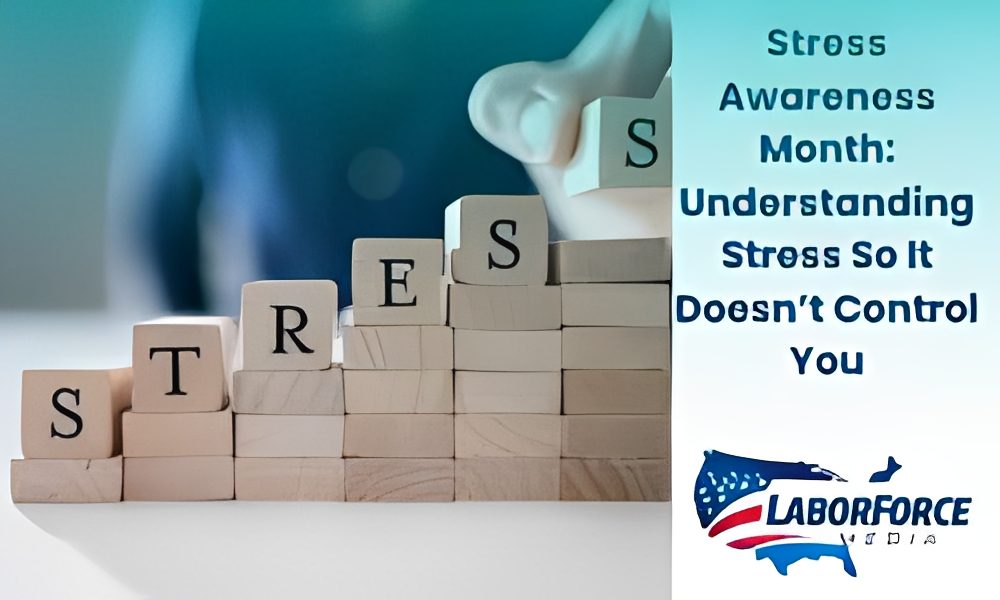
April is Stress Awareness Month, and that makes this the right time to talk honestly about something that affects nearly everyone: stress.
Stress is part of life. For union workers and their families, it can come from long shifts, demanding jobs, changing schedules, financial pressure, caregiving responsibilities, health concerns, and the everyday challenge of keeping a household moving. Some stress can push us forward. Too much stress, especially when it goes unmanaged, can wear us down physically, mentally, and emotionally.
At LaborForce, we want to help bring useful conversations like this to the surface. The goal is not to eliminate stress completely. The goal is to understand it, recognize it sooner, and manage it in ways that protect your health, your work, and your quality of life.

Not All Stress Is Bad
Not all stress is harmful.
There is such a thing as good stress — the kind that sharpens your focus, gives you energy, and helps you rise to a challenge. You might feel it before an important meeting, a tough assignment, a major deadline, a competition, or a big life event. That kind of stress can help you perform and stay alert.
But bad stress is different. Bad stress feels constant. It drains you instead of driving you. It can come from uncertainty, overwork, family strain, money worries, lack of sleep, or feeling like there is never enough time to recover before the next demand hits.
That is a reality many working families know well. Union workers often carry responsibilities both on the job and at home. When stress stops being temporary and starts becoming a way of life, it can affect everything from mood and sleep to concentration, patience, and physical health.
How to Check In With Yourself
Stress often builds quietly. Many people do not realize how overloaded they are until their body or their behavior starts telling the truth.
A good starting point is a simple self-check. Ask yourself:
Am I tired all the time, even when I get rest?
Am I more irritable or impatient than usual?
Am I having trouble focusing or staying organized?
Do I feel tense even when I am supposed to be relaxing?
Am I relying too much on caffeine, junk food, scrolling, alcohol, or avoidance just to get through the day?
Am I bringing stress home with me and taking it out on the people I care about?
For union workers and their families, these signs can show up in very real ways — less energy after work, shorter tempers at home, poor sleep before an early shift, mental fatigue on days off, or just feeling like you are always “on.”
One helpful habit is to rate your stress from 1 to 10 at the end of the day. Then ask:
What triggered it today?
How did my body respond?
What did I do to cope?
Did it actually help?
That kind of simple awareness can be the first step toward changing a pattern.
Signs Your Body May Be Sending You
Stress is not just “in your head.” It shows up in the body too.
Some common signs of unmanaged stress include:
headaches, muscle tension, stomach issues, trouble sleeping, racing thoughts, exhaustion, irritability, shallow breathing, and difficulty concentrating.
Some people become reactive. Some shut down. Some overwork. Some withdraw. Some feel emotionally flat. Others feel like they can never settle down.
The important thing is this: when your body keeps sending warning signs, pay attention. Pushing through everything may feel normal, especially in hardworking union households, but it is not always sustainable.
Healthy Ways to Manage Stress
The good news is that stress management does not have to mean a complete life overhaul. It usually starts with small, repeatable actions.
Here are a few healthy ways to begin:
Pause physically.
Take a few slow breaths. Stretch. Step outside. Even five minutes can help reset your body.
Protect your sleep.
A tired body has a much harder time managing pressure well.
Move every day.
Walking, exercise, or any kind of physical movement can help release tension.
Cut down the overload.
Too much news, too much scrolling, and too much negativity can keep your system stuck in stress mode.
Stay connected.
Stress grows in isolation. Talking to someone you trust can make a real difference.
Build simple routines.
Regular meals, better sleep habits, movement, and a little structure can help create stability, especially for busy union families managing demanding schedules.
At LaborForce, we believe worker wellness is not a side issue. It is part of the bigger picture. Strong unions depend on strong workers, and strong workers need the tools and support to stay well.
When It May Be Time to Seek Help
There is nothing weak about asking for help. In fact, it is one of the smartest things a person can do when stress becomes too heavy.
It may be time to seek help if stress is affecting your sleep, appetite, work performance, relationships, focus, or ability to function day to day. If you feel constantly overwhelmed, anxious, emotionally shut down, or unable to recover, it is worth reaching out.
That support might come from a doctor, counselor, therapist, clergy member, trusted friend, employee assistance program, or a benefits resource through your union health plan.
Too many people wait until stress becomes a crisis. It does not need to get that far.
A Better Way Forward
At LaborForce Media, we are committed to telling the stories that shape working America — and that includes conversations about health, resilience, and what it really takes for workers and families to thrive.
This month, instead of ignoring stress or treating it like weakness, start by noticing it. Be honest about it. Learn from it. Take small steps to manage it before it starts managing you.
For union workers and their families, that matters. Healthy workers are stronger on the job. Stronger families are better able to weather pressure. And stronger communities are built when people have the support they need to keep going without burning out.
This is the first article in our April stress awareness series from LaborForce Media. In the next article, we will look at how stress affects performance, relationships, and decision-making — and what working people can do before stress starts quietly taking control.
Tags: