




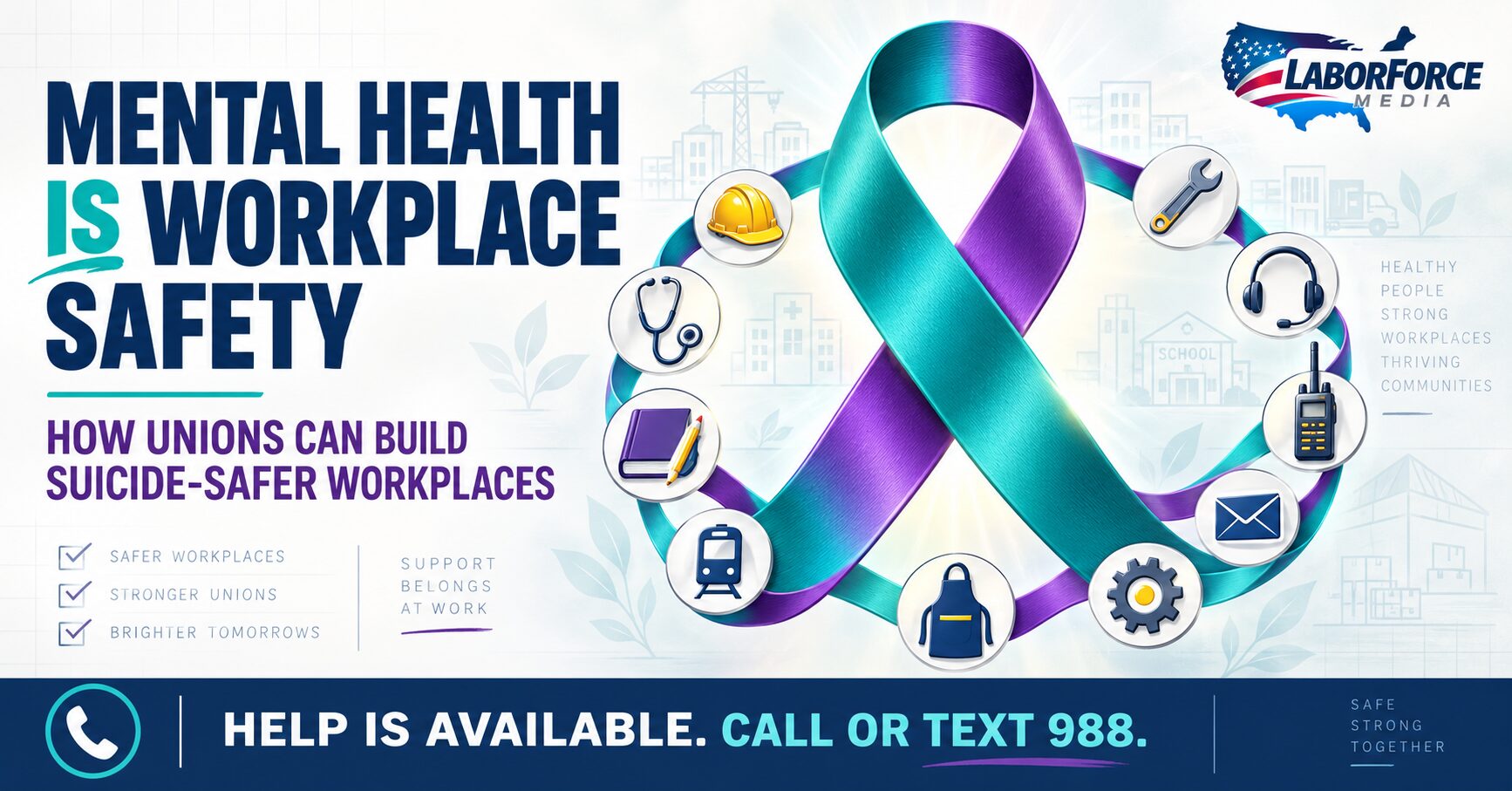
Workplace safety has always been central to the labor movement. Union members fought for safer equipment, better training, reasonable hours, protective standards, and the right to speak up when a job becomes dangerous.
Today, that responsibility must also include mental and emotional well-being.
A suicide-safer workplace is not one in which union leaders or coworkers are expected to diagnose or treat someone. It is a workplace where people can talk about emotional distress without shame, concerning changes are taken seriously, and workers know how to reach qualified help.
Work Can Affect the Whole Person
Suicide is complex. It is never caused by one event, workplace condition, or personal experience. However, pressures at work can combine with challenges outside of work and increase the strain a person is carrying.
The National Institute for Occupational Safety and Health identifies several workplace factors that can affect mental health and suicide risk. These include job stress, low pay, job insecurity, long hours, shift work, workplace bullying, and access to potentially lethal means.
Union workers may face additional pressures related to physically demanding work, injury, chronic pain, seasonal layoffs, mandatory overtime, extended travel, traumatic events, or time away from family.
Recognizing these pressures does not mean assuming that someone is suicidal. It means understanding that mental health is part of total worker health—and that working conditions can either add to the burden or become part of the support system.
Unions Are in a Unique Position to Help
Workers spend a large part of their lives on the job. Coworkers, stewards, supervisors, and apprenticeship instructors may notice when someone’s behavior changes.
A dependable coworker may begin missing shifts. An outgoing member may suddenly withdraw. Someone may appear unusually agitated, hopeless, reckless, or overwhelmed. They may talk about feeling trapped, being a burden, or having no reason to continue.
These changes should not be used to label or diagnose someone. They are reasons to check in.
Unions already have trusted networks in place. Union halls, safety committees, apprenticeship programs, benefit funds, retiree groups, and steward systems can all help deliver consistent information and connect members with appropriate resources.
Make Emotional Safety Part of Every Safety Plan
Suicide prevention should not exist only as a poster displayed during September. It can be incorporated into the safety practices unions and responsible employers use throughout the year.
Practical steps include:
- Posting the 988 Suicide & Crisis Lifeline at jobsites, union halls, training centers, and benefit offices
- Including mental-health resources in orientations and safety meetings
- Training stewards, supervisors, and peer supporters to recognize concerning changes
- Explaining behavioral-health, employee assistance, and union benefit resources in plain language
- Protecting privacy and addressing fears that seeking help could threaten employment
- Reviewing schedules, staffing, bullying, harassment, and other conditions that may increase stress
- Developing a coordinated plan for responding to a crisis or suicide loss
CPWR—The Center for Construction Research and Training offers free toolbox talks, training programs, hazard alerts, and suicide-prevention materials. Although many were developed for construction, the underlying principles can help unions across industries begin important conversations.
Coworkers Can Be Bridges to Help
Union members are trained to watch for hazards and protect one another. That same principle can guide a conversation with someone who appears to be struggling.
Choose a private moment. Describe what you have noticed without judgment. You might say, “I’ve noticed you haven’t seemed like yourself lately, and I’m concerned about you. How are you doing?”
Then listen.
Do not argue, lecture, minimize the person’s feelings, or immediately try to solve every problem. Stay calm. Let the person know they matter. If you are concerned about suicide, take the situation seriously and help connect them with trained support.
A steward or coworker is not a therapist. The goal is not to provide counseling. The goal is to create a bridge between someone who may feel alone and people who are qualified to help.
When appropriate, remain with the person while they call or text 988, contact a family member, reach an employee assistance program, or connect with a healthcare professional.
Build Trust Before a Crisis Happens
Workers are more likely to speak up when they believe they will be treated with dignity.
That requires leadership. Union leaders and employers should use respectful language, protect confidentiality, enforce anti-bullying policies, and make it clear that asking for help is not weakness.
Benefits must also be understandable and accessible. A phone number buried in a handbook is not enough. Members need to know what services are available, whether they are confidential, how much they cost, and how to use them.
Finally, support should include follow-up. Checking in again after a difficult conversation tells a coworker that the concern was genuine and that they have not been forgotten.
Safety Means Bringing Everyone Home
The labor movement was built on collective responsibility. Workers organized because no individual should have to face dangerous conditions alone.
That principle belongs in suicide prevention, too.
We can build workplaces where emotional distress is met with compassion instead of ridicule. We can give stewards and supervisors practical tools. We can demand working conditions that support the whole person. Most importantly, we can remind every member that their life has value and that help is available.
If you or someone you know is thinking about suicide or harming themselves, call or text 988 to reach the 988 Suicide & Crisis Lifeline. Free, confidential support is available 24 hours a day, seven days a week. If someone is in immediate danger or needs urgent medical assistance, call 911 or go to the nearest emergency department.
Tags: Community Wellness, Union Workers