



For many Americans, Labor Day marks the unofficial end of summer. It is a day for cookouts, community gatherings, and one last long weekend before fall begins.
But Labor Day is much more than a day off.
It is a national tribute to the working people who built America, strengthened its communities, and fought for safer workplaces, fair wages, reasonable hours, and a voice on the job. It is also a celebration of today’s union members—the people who keep our country moving every day.
The History of Labor Day
The first Labor Day celebration took place in New York City on September 5, 1882. According to the U.S. Department of Labor, the Central Labor Union organized the event to bring workers together for a public demonstration followed by a community festival.
Approximately 10,000 workers joined that first Labor Day parade. They marched from New York City Hall through the streets of Manhattan, according to the Library of Congress.
At the time, many Americans worked long hours under difficult and often dangerous conditions. Child labor was common. Workplace protections were limited. Paid time off, health benefits, retirement security, and the eight-hour workday were far from guaranteed.
Labor organizations gave workers a way to stand together and demand something better.
The idea of a holiday honoring workers quickly spread. Oregon became the first state to formally recognize Labor Day in 1887. Other states soon followed. In 1894, Congress passed legislation making the first Monday in September a federal holiday. President Grover Cleveland signed it into law on June 28 of that year.
Why Do We Hold Labor Day Parades?
Parades have been part of Labor Day from the beginning.
Early labor leaders envisioned a public march that would demonstrate the strength, pride, and unity of trade and labor organizations. Workers who were often overlooked inside factories, workshops, rail yards, mines, and construction sites could step into public view together.
The parade sent a clear message: working people were essential to America’s growth and deserved to be seen, heard, and respected.
That message still matters.
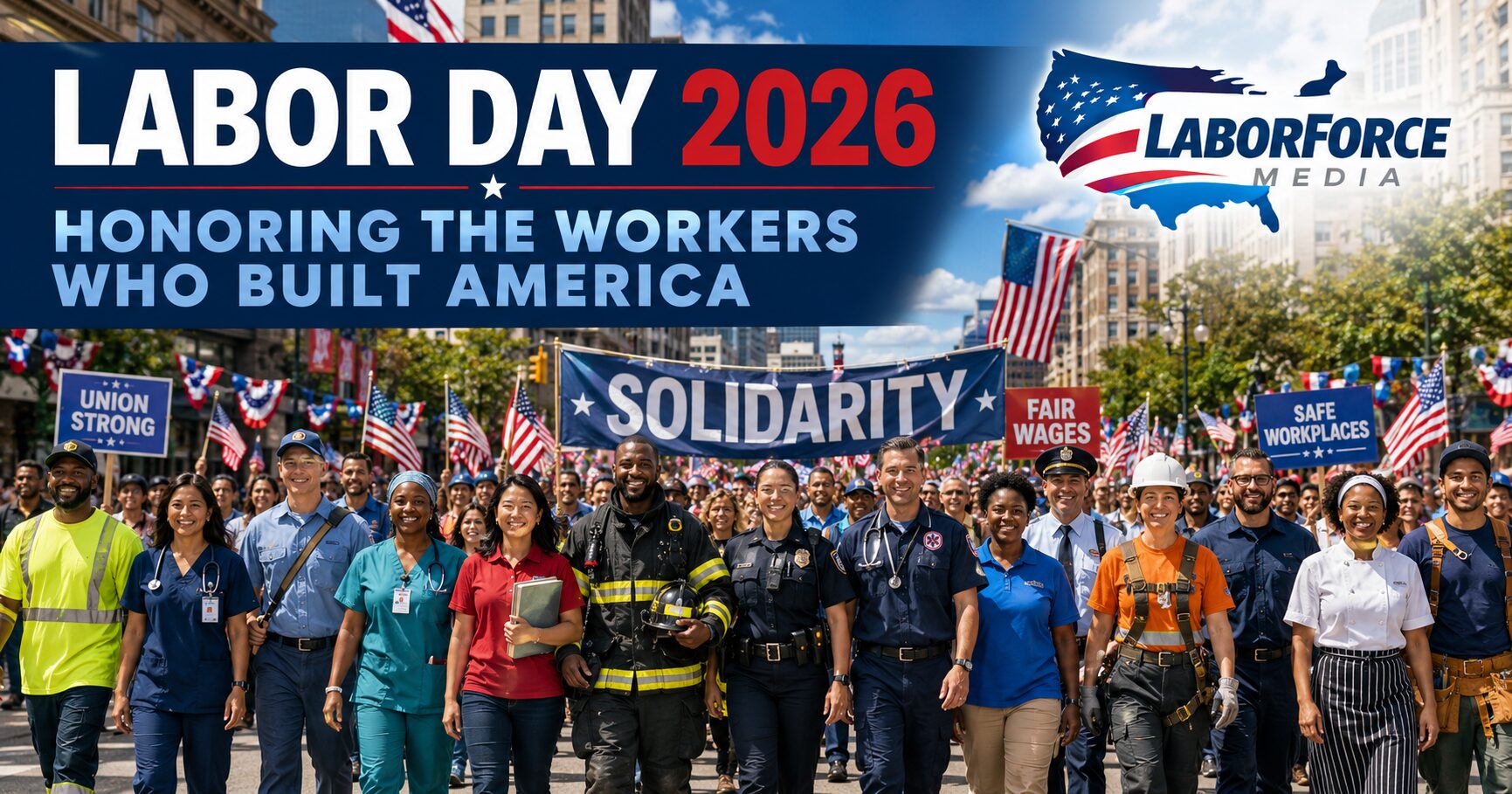
Today’s Labor Day parades bring together union members, apprentices, retirees, families, community leaders, and supporters. Union banners and colors tell the stories of individual trades, but the parade itself demonstrates something larger. Workers from different industries can unite around shared values.
A nurse and an ironworker may perform very different jobs. So may a teacher, firefighter, transit operator, electrician, postal worker, communications technician, sanitation worker, hotel employee, and public servant. Yet each deserves dignity, safety, fair compensation, and respect.
Labor’s Progress Changed American Life
The labor movement helped turn many once-radical demands into widely accepted workplace standards.
Through generations of organizing, bargaining, advocacy, and sacrifice, workers advanced the fight for safer jobsites, better wages, weekends, overtime protections, employer-supported benefits, retirement security, workers’ compensation, and limits on child labor.
Those gains were never simply handed to working people. Workers organized for them, negotiated for them, marched for them, and—in some cases—risked their livelihoods and lives for them.
The benefits extend far beyond union membership. When organized labor raises standards, it creates pressure for better conditions throughout an industry and across the economy.
Labor Day gives us an opportunity to remember that progress and recognize that the work is not finished.
Celebrating Today’s Union Members
This Labor Day, we celebrate the union members working in every corner of America.
They construct our buildings, bridges, schools, energy systems, and data centers. They care for patients, educate children, manufacture essential goods, operate public transportation, deliver packages, maintain utilities, protect neighborhoods, respond to emergencies, and keep public services running.
They complete rigorous apprenticeships, master complex skills, mentor younger workers, and uphold professional and safety standards. During emergencies, natural disasters, public-health crises, and national tragedies, union members are often among the first to respond and the last to leave.
Their work deserves more than an annual thank-you. It deserves year-round respect and support.
What Supporting Labor Means Today
Supporting labor means believing that every worker should return home safely after a shift.
It means supporting fair wages that allow families to live with dignity. It means access to quality healthcare, mental-health resources, paid leave, and a secure retirement. It means opposing harassment, discrimination, wage theft, and unsafe working conditions.
Most importantly, it means respecting the right of workers to organize, bargain collectively, and have a meaningful voice in decisions that affect their lives.
These are not abstract labor issues. They affect whether families can pay their bills, care for loved ones, plan for the future, and participate fully in their communities.
Show Up for Labor Day
This Labor Day, do more than enjoy the day off. Learn what the holiday represents.
Attend a Labor Day parade or union celebration in your community. Bring your children and explain why workers are marching. Thank the union members who serve your neighborhood. Support businesses and organizations that respect workers. Share labor stories and help younger generations understand what collective action has achieved.
If you belong to a union, march proudly. Your work, skill, and service deserve to be celebrated.
Labor Day is both a tribute and a call to action. It honors the workers who came before us, celebrates the union members serving America today, and challenges all of us to protect the dignity of work for generations to come.
When workers stand together, America becomes stronger.
Tags: Labor Day, Union History, Union Labor, Union Workers